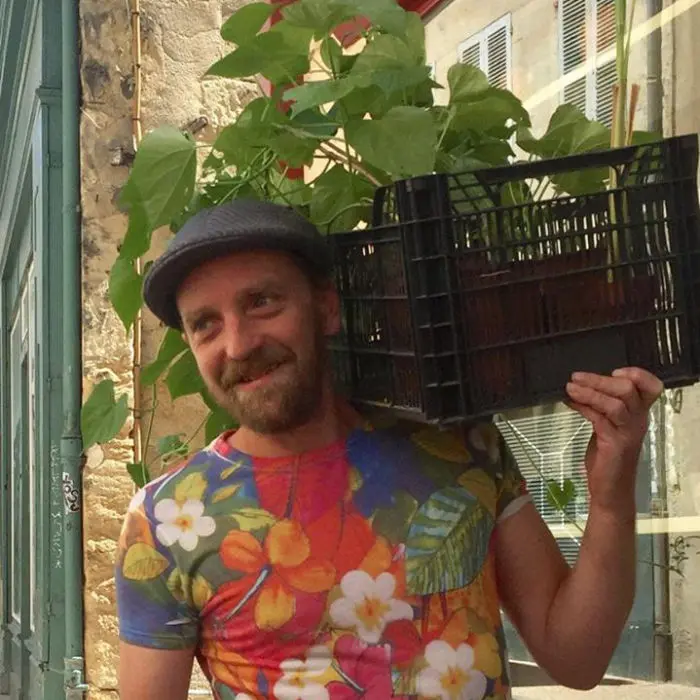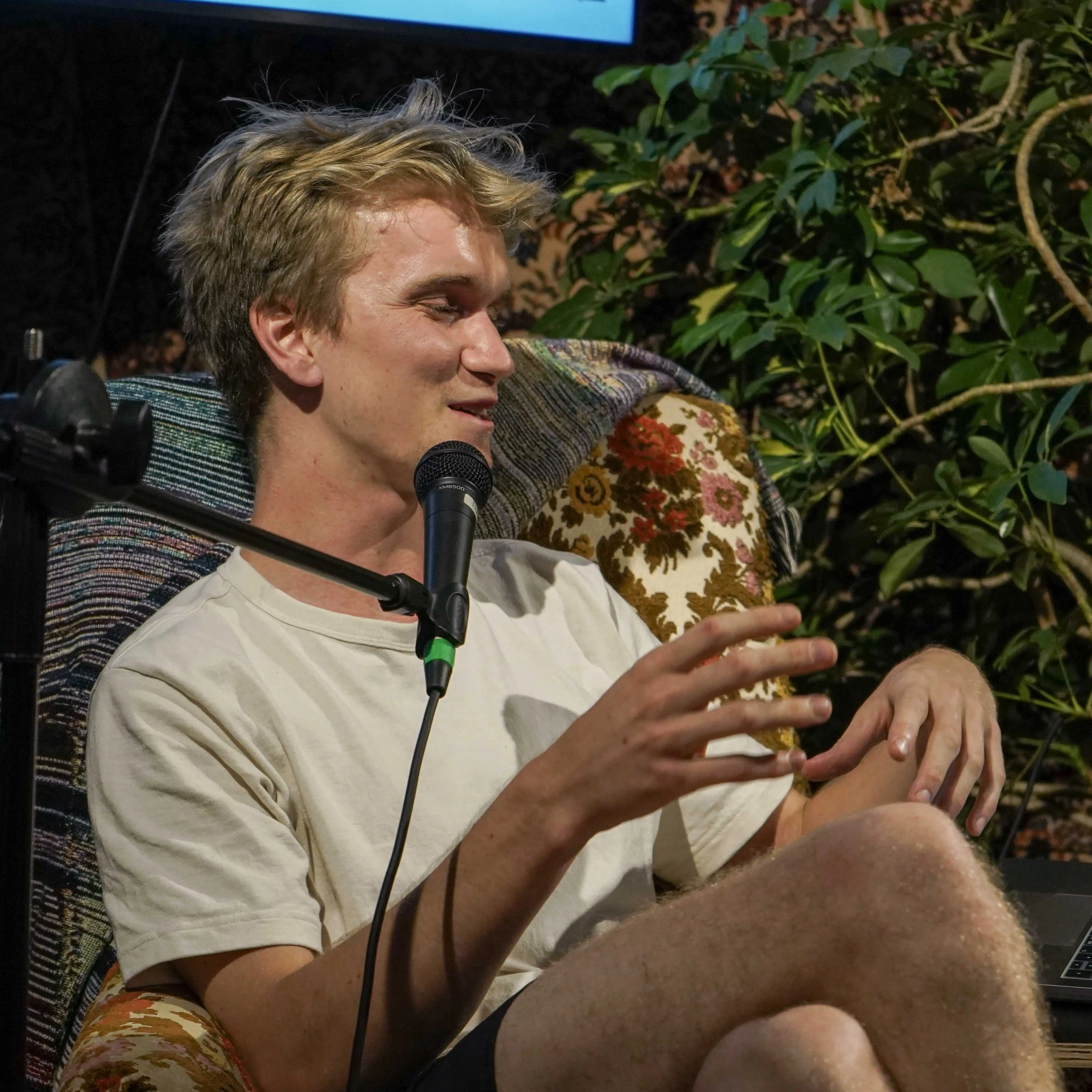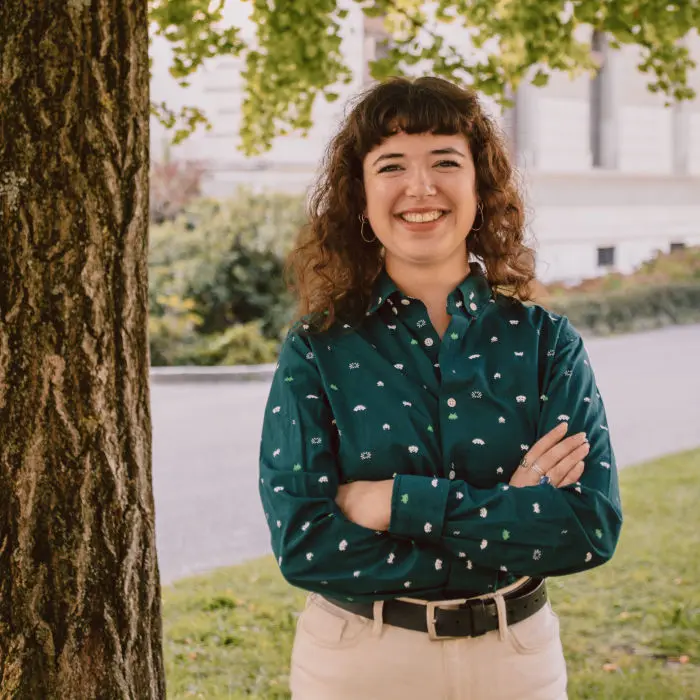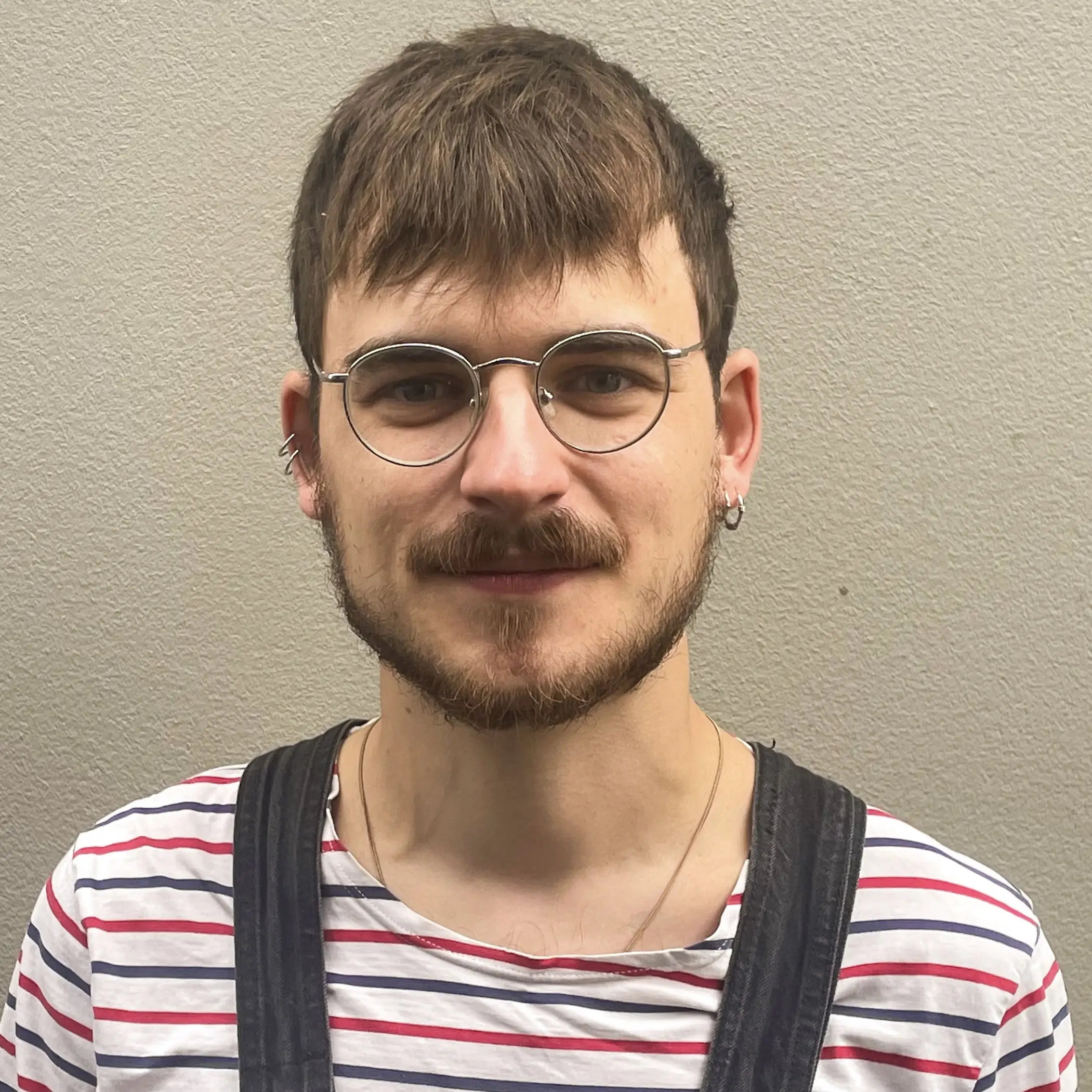
Ioana Vreme-Moser RO/DE
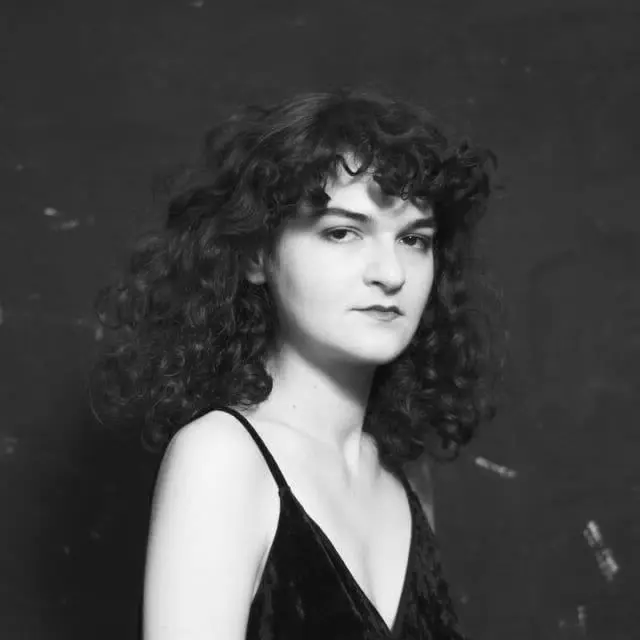
Ioana Vreme Moser (b. 1994) is a Romanian sound artist engaged with hardware electronics, speculative research, and tactile experimentation.
In her practice, she uses rough electronic processes to obtain different materialities of sound. She places electronic components and control voltages in different situations of interaction with her body, organic materials, lost and found items, and environmental stimuli. From these collisions, synthesized sounds emerge to carry personal narrations and observations on the history of electronics, their production chains, wastelands, and entanglements in the natural world.
Amongst others, she has performed and exhibited at ZHM Karlsruhe (DE), Rewire Festival (NL), the National Gallery of Denmark (DK), iii, Instrument Inventors Initialtive (NL), singuhr (DE), Fonderie Darling (CA), Akademie der Künste Berlin (DE); Vancouver New Music (CA), Manifesta 14 (XK); SFX - Sound Effects Seoul (KR), Ars Electronica (AT), Simultan Festival (RO); Eigen+Art Lab - Transmediale, Berlin (DE).
ioanavrememoser.com
Ted Davis USA/CH
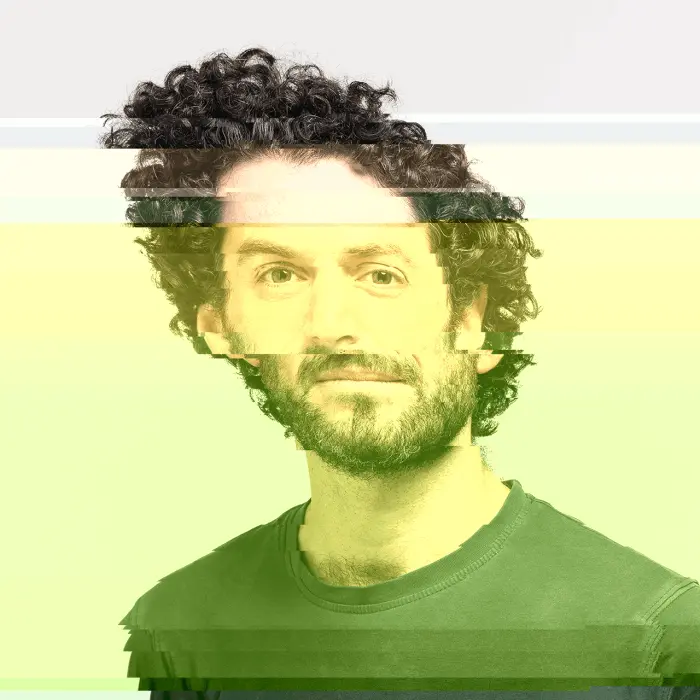
Ted Davis is a media artist / designer / educator originally from the United States and based in Basel, Switzerland. Since 2010 he teaches interaction design and coordinates the UIC/HGK International Master of Design program within the Institute Digital Communication Environments IDCE, Basel Academy of Art and Design HGK FHNW. His work and teachings explore the volatility of digital media through glitch and reactivating older ‘new media’ through newer programming means. His open source projects (basil.js, XYscope, P5LIVE, p5.glitch) enable designers to program within Adobe InDesign, render vector graphics on vector displays, collaboratively live code visuals with p5.js, and glitch any media in real-time within the web browser. In 2019, he was a p5.js Contributing Conference participant, joining a working group focused on Music and Code in Performance. In 2021 he received the Basel Media Art Prize (Basler Medienkunstpreis) for p5.glitch and was a Processing Foundation Teaching Fellow. In 2024 he was awarded a Swiss Design Award in Media & Interaction Design for P5LIVE. With international exhibits, lectures and workshops, he empowers students to take hold of the computer’s ability to design possibilities beyond that of the hand or mouse.
teddavis.org

Disnovation FR/PO/CA/DE
DISNOVATION.ORG is a research collective set up in paris in 2012, whose core members include Maria Roszkowska (pl/fr), Nicolas Maigret (fr), Baruch Gottlieb (ca/de). They work at the interface between contemporary art, research and hacking, and compose tailor-made teams for each investigation together with academics, activists, engineers, and designers. More specifically their recent artistic provocations seek to empower post growth imaginaries and practices while challenging dominant techno-solutionist ideologies. Their research includes artworks, publications & curation.
Centre Pompidou (Paris), Transmediale (Berlin), the Museum of Art and Design (New York), Palais de Tokyo (Paris), FILE (Sao Paulo), ZKM (Karlsruhe), Strelka Institute (Moscow), ISEA (Hong Kong), Elektra (Montreal), China Museum of Digital Arts (Beijing), and the Chaos Computer Congress (Hamburg)… Their work has been featured in: Forbes, Vice, Wired, Motherboard, Libération, Die Zeit, Arte TV, Next Nature, Hyperallergic, Le Temps, Neural.it, Digicult, Gizmodo, Seattle Weekly, torrentfreak.com, and Filmmaker Magazine among others.
disnovation.org
Benjamin Gaulon FR
Benjamin Gaulon is an artist, researcher, educator and cultural producer based in Paris. He has previously released work under the name "recyclism". His research focuses on the limits and failures of information and communication technologies; planned obsolescence, consumerism and disposable society; ownership and privacy; through the exploration of détournement, hacking and recycling. His projects can be softwares, installations, pieces of hardware, web based projects, interactive works, street art interventions and are, when applicable, open source.
Benjamin Gaulon has presented his work internationally at exhibitions, festivals and conferences in alternative, institutional or academic contexts for schools, museums, galleries or in public space. Including NeMe, National Art Museum of China, Shanghai Institute of Visual Arts, Société, Mapping Festival, Taipei Fine Art Museum, Seconde Nature, Cityleaks Festival, Media Lab Prado, Gamerz Festival, National Taiwan Museum of Fine Arts, ZKM, Piksel Festival, UMOCA, HeK Basel, Espace Gantner, Transmediale, RIXC, Furtherfield, Lichter Filmfest, Museum of Contemporary Art Chicago, Gaite Lyrique, Le jeu de Paume Paris, Science Gallery.
recyclism.com

Sarah GHP US/DE
Sarah Groff Hennigh-Palermo is an artist, programmer, and erstwhile data designer. Her work focuses on using the digital in a manner that can transcend its squalid and militaristic roots and reach out towards the sublime. She has created data-obscured art sites, new computer languages, and hybrid nostalgia machines.
Her current focus is livecoded performances and abstract digital installations. For both, she makes use of image processing tools new and old, from the Jones frame buffer to a time-based SVG framework she developed herself.
Sarah is an alumna of the School for Poetic Computation, Recurse Center, Brown University, and NYU Tandon School of Engineering. In addition to a solo exhibition as part of Wallplay's On Canal series, she has taken part in group shows at Sonar+D, Westbeth, Day for Night, Flux Factory, and Denver Supernova.
Born in Southern California, Sarah lives and works in New York and Berlin.
sarahghp.com
Gijs Gieskes NL
Gijs Gieskes is an industrial-designer/artist from the Netherlands specializing in the design of electronic devices, for audiovisual use.
"When I started to make electronic things I knew almost nothing about how they work, but with simple solutions I managed to make usable instruments anyway. For instance I used a speaker as a relay, where a transistor should have been used. Because of knowing little I used my creativity in a none efficient way, I invented things that already existed. But I feel proud of these inventions, for instance the Relay, the Vactrol and the Phase Locked Loop. Nowadays I know much more about electronics, but I still want to work the same way as when I started."
gieskes.nl
Dasha Ilina RU/FR
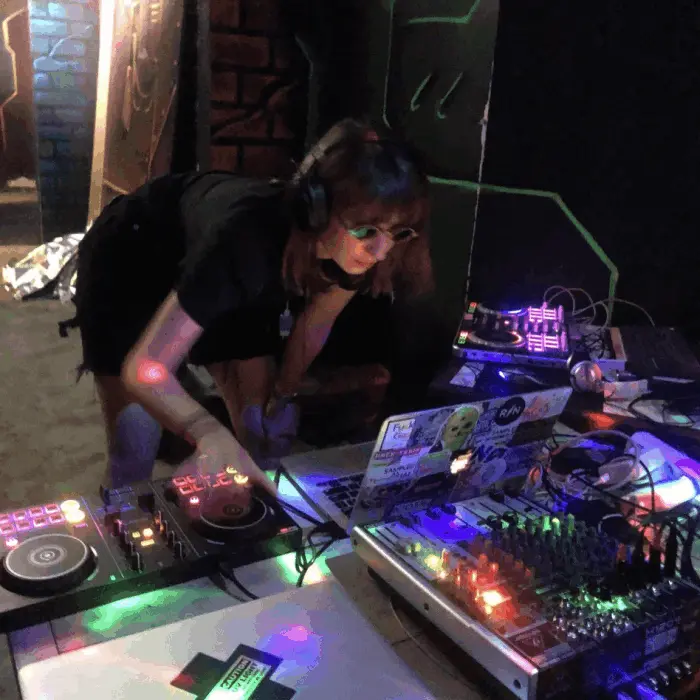
Dasha Ilina is a Russian artist based in Paris, France. Through the employment of low tech and DIY approaches her work highlights the nebulous relationship between our desire to incorporate modern technologies into our daily lives and proposed social imperatives for care of oneself and others. Her practice engages the public in order to facilitate a space for the development of critical thought regarding our modern day relationships, privacy in the digital age, and the reflexive contemporary desire to turn to technology for answers.
She is the founder of the Center for Technological Pain, a project that proposes DIY solutions to health problems caused by digital technologies for which she has received an Honorary Mention at Ars Electronica.
dashailina.com

Fabiola Larios US/MX
Fabiola Larios (b. 1986) is a Mexican interdisciplinary artist based in Miami, currently in residence at Bakehouse Art Complex. Her work explores the aesthetics and politics of surveillance, self-representation, and obsolescence in the digital age. Through installations that fuse e-waste, glitter, vintage electronics, and bedazzled surveillance cameras, Larios critiques how identity is shaped by algorithmic systems and economies of visibility.
Blending hyper-feminine visual languages with sharp commentary on internet culture, data commodification, and the environmental costs of technological excess, her installations often position viewers as both subject and observer—immersing them in environments of playful, uncanny scrutiny.
fabiola.io
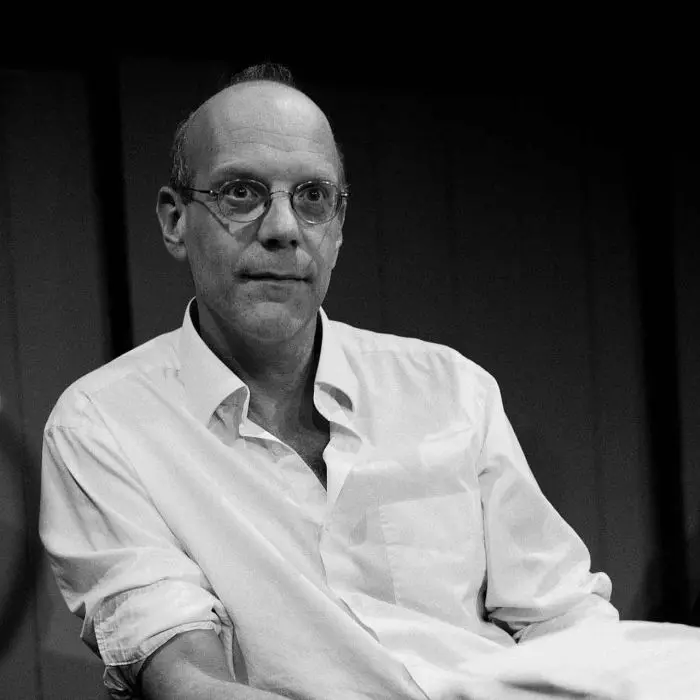
Geert Lovink NL
Geert Lovink is a Dutch media theorist, internet critic and author of Uncanny Networks (2002), Dark Fiber (2002), My First Recession (2003), Zero Comments (2007), Networks Without a Cause (2012), Social Media Abyss (2016), Organisation after Social Media (with Ned Rossiter, 2018), Sad by Design (2019) and Stuck on the Platform (2022). He studied political science at the University of Amsterdam (UvA) and received his PhD from the University of Melbourne. In 2004 he founded the Institute of Network Cultures at the Amsterdam University of Applied Sciences (HvA). His centre organizes conferences, publications and research networks such as Video Vortex (online video), The Future of Art Criticism and MoneyLab (internet-based revenue models in the arts). Recent projects deal with digital publishing experiments, critical meme research, participatory hybrid events and precarity in the arts.
From 2007-2018 He was media theory professor at the European Graduate School. In December 2021 he was appointed Professor of Art and Network Cultures at the UvA Art History Department. The Chair (one day a week) is supported by the HvA.
Institute of Network Cultures
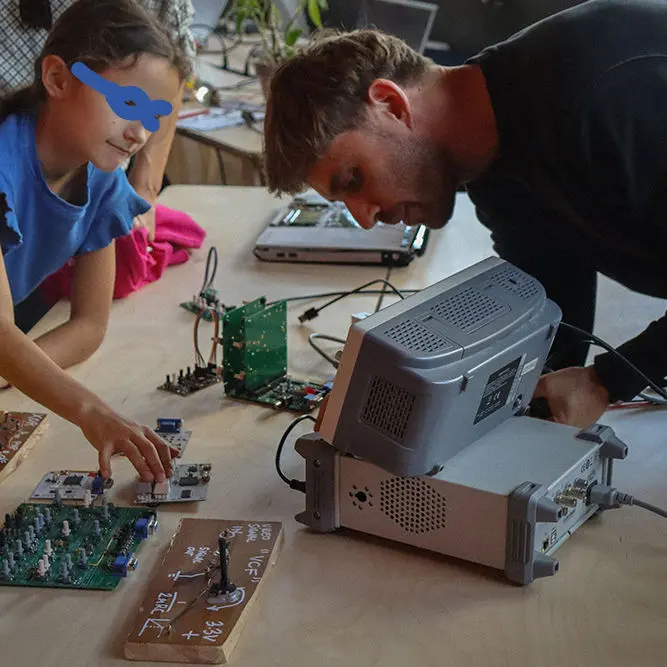
Jonah Ross Marrs US/FR
After studying history and architecture in Canada, Jonah became a teaching assistant for Neil Gershenfeld’s course How to Make (Almost) Anything (HTMAA) at MIT in 2018. After settling in Paris, he put on DIY electronics workshops at ENSCI–Les Ateliers, ENS Paris-Saclay, and the Berlin University of the Arts (UdK).
Jonah is inspired by American avant-garde artists such as John Cage, with his prepared piano; Sonia Sheridan, with her prepared photocopier; Stan Brakhage, with his handcrafted 16mm films; and Steina Vasulka, with her experiments in analog television. Curious about the inner workings of electronic and computational systems, Jonah develops video synthesizers based on simple logic gates. In a tinkerer’s spirit, his prototypes allow him to explore the formal modes of expression of media technologies once they are freed from their standard settings and conventional uses.
Jonah is an instructor of electronics and digital fabrication at the digital hub of the Beaux-Arts de Paris.
marrs.io

Rosa Menkman NL
Rosa Menkman is a Dutch artist and researcher of resolutions. Her work focuses on noise artifacts resulting from accidents in both analog and digital media.
The journey of her protagonist, the Angel of History—inspired by Paul Klee’s 1920 monoprint, Angelus Novus, and conceptualized by Walter Benjamin in 1940—functions as a foundational framework for her explorations of image processing technologies. As the machines upgrade, the Angel finds herself caught in the ripple of their distortions, unable to render the world around her.
Complementing her practice, she published Glitch Moment/um (INC, 2011), a book on the exploitation and popularization of glitch artifacts. She further explored the politics of image processing in Beyond Resolution (i.R.D., 2020). In this book, Rosa describes how the standardization of resolutions promotes efficiency, order, and functionality, but also involves compromises, resulting in the obfuscation of alternative ways of rendering.
In 2019, Menkman won the Collide Arts at CERN Barcelona award, which inspired her recent research into im/possible images, consolidated in the im/possible images reader (published by the i.R.D. & Lothringer, with support from V2, 2022).
beyondresolution.info
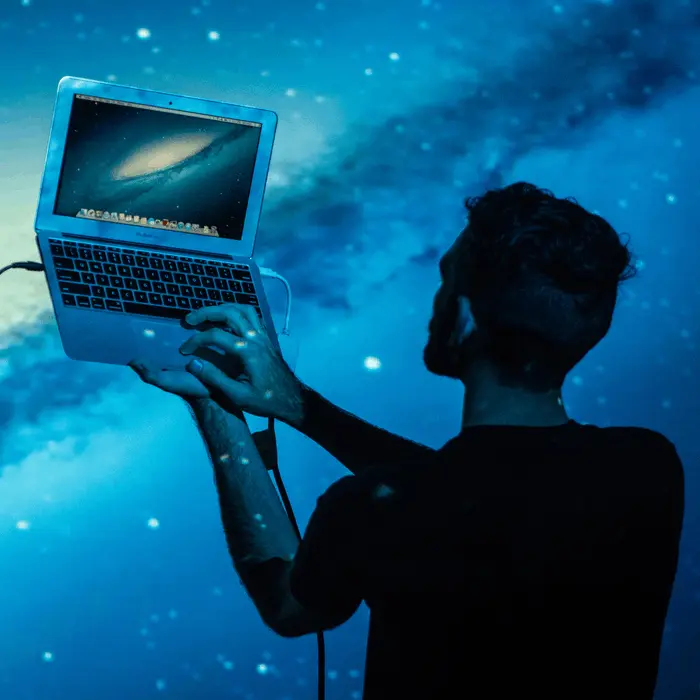
Nick Briz US
Nick Briz is an internationally recognized new-media artist, educator and organizer. His work investigates the promises and perils of living in an increasingly digital and networked world.
He is an active participant in various online communities and conversations including glitch art, net art, remix culture, digital literacy, hacktivism and digital rights. He's an Assistant Instructional Professor in the Media Art and Design program at the University of Chicago.
He also works as creative technologist and has produced award winning work from custom web applications to interactive installations for a wide range of clients.
nickbriz.com
Jon Satrom US
Jon Satrom is a Chicago-based artist, educator, and organizer who delights in digital detritus. He playfully problematizes media systems, interfaces, and conventions—scrambling the sanitized polish of tech with raw error, creative misuse, and humor. Through real-time performance, software art, and collaborations with both humans and machines, Satrom leverages glitches, kludges, crops, instability, and what’s been called “exhaustion aesthetics” to expose the cracks, contradictions, and biases embedded in our technological infrastructures.
Through his boutique digital studio, studiothread, Satrom leads creative projects that raise funds and visibility for arts programming and cultural initiatives. As cofounder of netizen.org—a collective of media artists and educators—he advocates for a more critical, playful, and creative digital world. In his role as Assistant Senior Instructional Professor and Associate Director of the Media Arts and Design Program at the University of Chicago, Satrom shares his expertise and curiosity with the next generation of experimental artists and designers.
jonsatrom.com
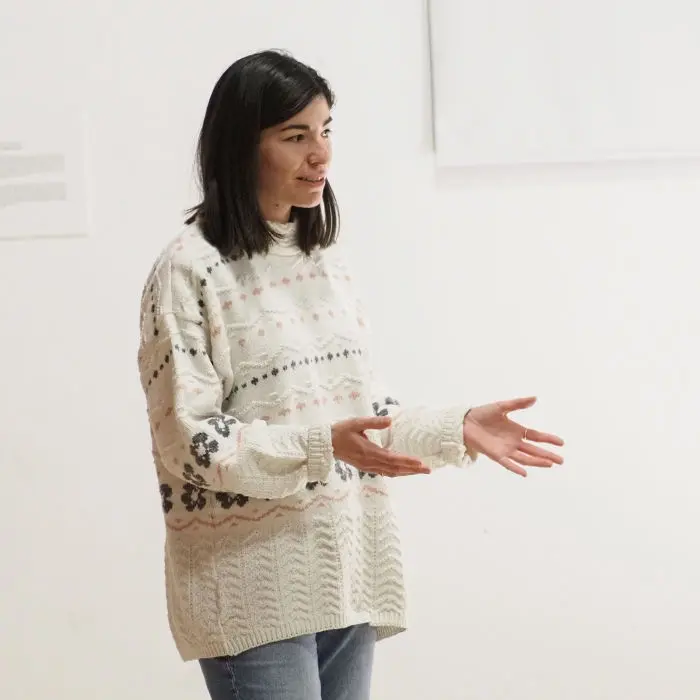
Diane Pricop RO
Diane Pricop / Obsolete Studio is an independent cultural producer. She co-founded Obsolete Studio in 2019 that promotes artist-researchers and projects addressing the entanglement between environmental, social and technological challenges, through educational programmes, interdisciplinary research projects and a blog. She is now based in Bucharest where she focuses on developing art-science based projects such as residencies, art production and exhibitions, as well as European collaborations.
obsolete.studio

S8jfou FR
s8jfou [“am I crazy” in French] pushes do-it-yourself culture to its confines. In his self-sufficient cabin, he finds himself at the avant-garde of computer music, through coding and building his own tools and controllers, with which he creates a left-field, broken-beat, and glitchy bass music.
When playing live (Immersive Live), he infiltrates the crowd with his self-built and portable controller, and make the walls shake with powerful subs and surgical rhythms.
When he leaves the crowd for a stage (AV Live), he’s facing a screen, his back to the audience. On that screen is an interface that is both an instrument and an audio-visual
experience that blends free party archives, personal memories and other nostalgic reminiscences.
s8jfou.com
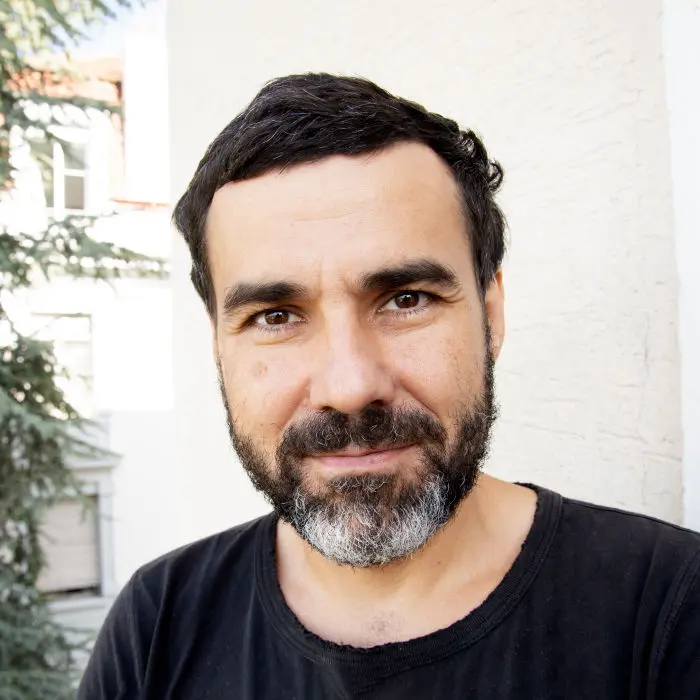
Gordan Savičić AT/CH
Gordan Savičić is an artist, educator, critical engineer and researcher whose work investigates the impact of digital infrastructures on society. Born in Vienna, Austria, he pursued studies in media art (Prof. Peter Weibel & Prof. Ruth Schnell) in Vienna and at the Piet Zwart Institute in Rotterdam (Dr. Florian Cramer). His artistic practice focuses on revealing opaque digital infrastructures, addressing issues of datafication, algorithmic governance, and digital surveillance.
Through a variety of media, Savičić creates interactive installations, software art, and critical interventions, engaging with the intersections of online and offline worlds. His work has been exhibited at numerous international festivals and institutions, including ZKM in Karlsruhe, Laboral Gijon and Seoul Biennale in South Korea, among others. Savičić has received multiple awards and honorary mentions for his work, including from transmediale, Rhizome, and Ars Electronica. He is also an active collaborator, working with collectives like Weise7 in Berlin to organize workshops, exhibitions, and publications that examine tactical media and software art.
He currently holds a teaching position at the Lucerne University of Applied Sciences and Arts (HSLU), where he mentors students in digital design and critical approaches to technology.
yugo.at
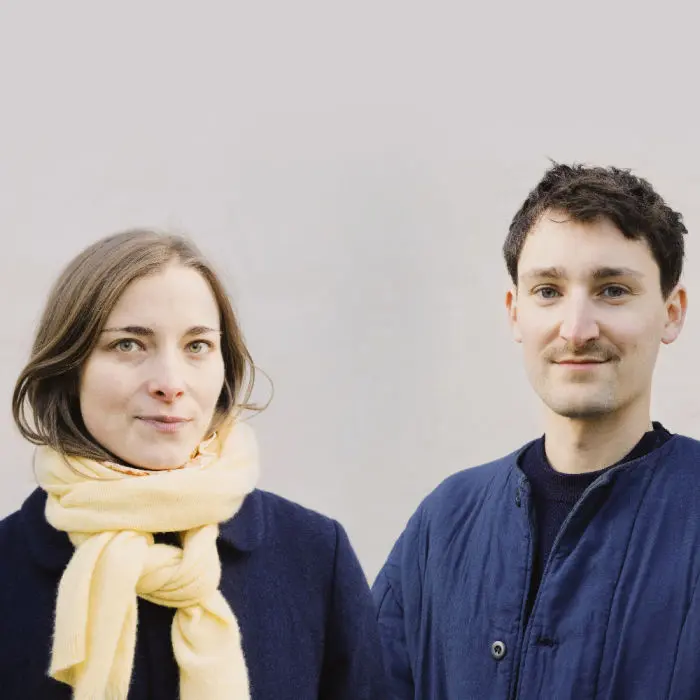
Terrains Communs FR
Philippine Mangeart is a space designer and seamstress. Her sensitivity to colors led her to train with Michel Garcia, expert chemist of plant pigments. She has since explored the many possibilities of natural dyes: dye, ink, pigments and creating textile objects with her brand Aube.
Max Félix is a designer and artistic director based in Nevers, Burgundy. A graduate in applied arts and design, he has worked for more than ten years on projects related to ecology and is specialized in artistic direction, graphic design and photography.
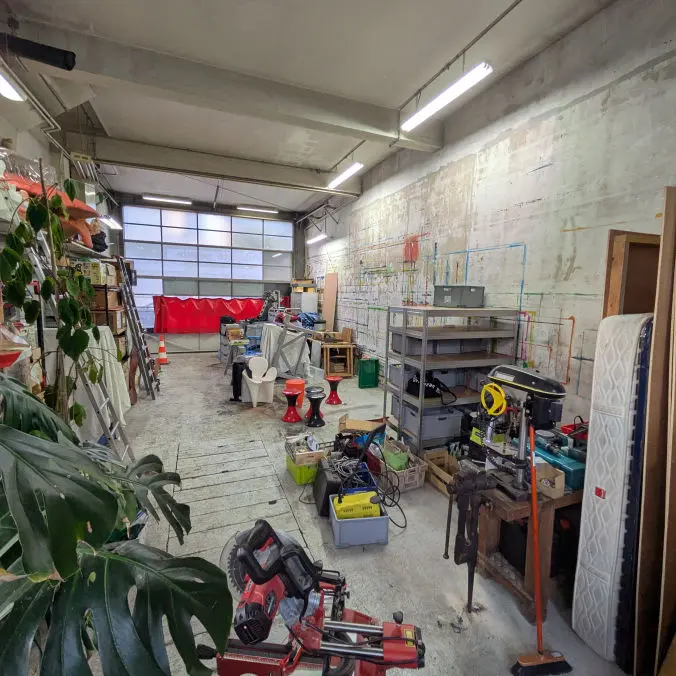
Together they co-founded, in 2022, Terrains Communs, an nonprofit at the crossroads of ecology, arts and applied arts. The non-profit manages a 1.3 hectare wasteland near the city center of Nevers as an educational and creative ecosystem which hosts workshops, workshops, training, shows around the arts, applied arts and ecology.
terrainscommuns.org

Clara Rigaud FR
Clara Rigaud / clararigo is a postdoctoral researcher specializing in sustainable interactive systems design.
Until 2019, she worked as a partner within the Random Pixel Order collective, which she co-founded in 2015. This collective explored experimental techniques in virtual and physical creation through various publishing projects, interactive installations, and events dedicated to DIY, hacking, and glitches.
She did her thesis at the robotics institute of Sorbonne university, where she explored the design of tools to facilitate knowledge sharing in DIY practices within Fablabs.
Since then, her work has focused on designing interactive systems using reused materials. She studies the interactive potential of obsolete smartphones and develops open-source tools to enable anyone to easily create objects from these devices and promote their reuse. She builds various prototypes alone or with other artists, exploring and enriching her developing toolkit, Zombitron.
She recently created MIMTEndO: Musical Instrument Made To END Obsolescence. Maybe she will show it to you if you’re nice to her.
clararigaud.com

Clément Rigaud FR
Clément Renaud works on how technological systems shape geography and the ways we live, drawing on a practice that spans engineering, research, and writing. Since childhood, he has been embedded in the transformation of digital technology and infrastructure — building software, conducting field research, and writing about how these changes unfold from Europe and China.
He teaches a course on Chinese cities at Sciences Po's Urban School, co-founded the Center for Blockchain and Generative Culture at City University of Hong Kong, and serves on the advisory board of the Fabricatorz Foundation (USA). He is the author of Realtime: Making Digital China (EPFL Press) and is currently working on a book about the history of computers seen from Shenzhen. His latest project, Source Reader, is a course that teaches software literacy by reading masterpieces of code through culture and history.
clementrenaud.com
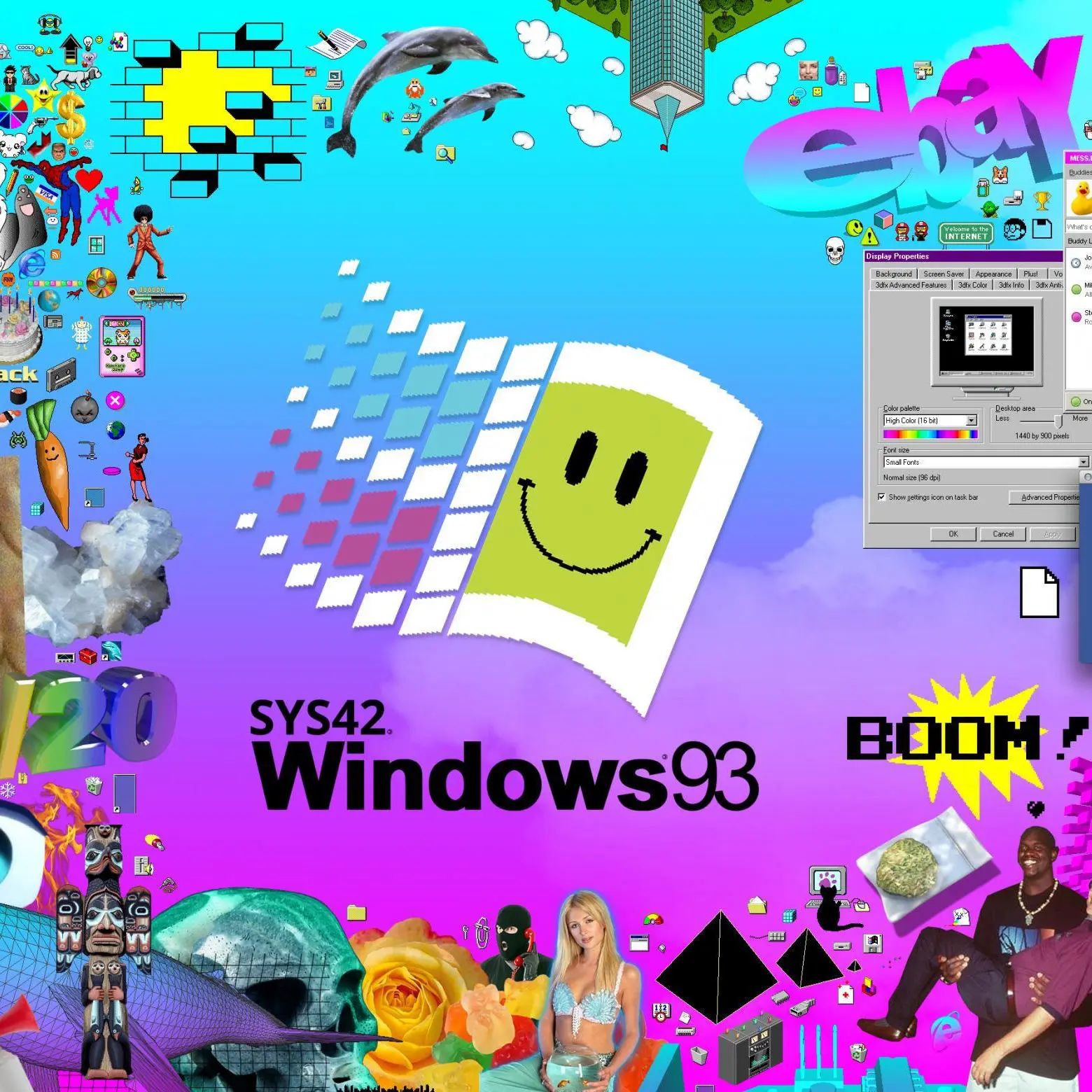
Windows93.net aka Jankenpopp+ Zombectro FR
Windows93 est un système d’exploitation fictif et instable, quelque part entre œuvre interactive et instrument détourné. Un espace où le code, le bruit et les accidents deviennent matière à expérimenter.
windows93.net
@jankenpopp